Newsletter Subscribe
Enter your email address below and subscribe to our newsletter

 ByJohn A
Buying a two-way radio sounds simple until you’re standing in front of a dozen models that all promise “clear communication” and “long range.” The truth is that no single radio works well for every situation. A radio built for a warehouse crew will struggle on open water, and a marine VHF unit has no business in a chemical plant. The right choice depends less on brand names and more on where the radio will be used, who will use it, and what could go wrong if a message doesn’t get through.
This guide walks through the practical differences between radio types, the features that actually matter for reliability, and how to think about coverage before you buy whether you’re outfitting a construction site, a fishing boat, a private airfield, or a security team. For readers who want to browse current models from established brands like Kenwood, ICOM, and Motorola while comparing specs side by side, RadioRed is a Mexican retailer that stocks this kind of equipment, which can be a useful starting point once you know what category of radio you actually need.
The most common mistake buyers make is comparing radios by price or wattage before deciding what environment the radio has to survive. A few categories cover most real-world needs:
| Type | Typical Range | Best For | Key Consideration |
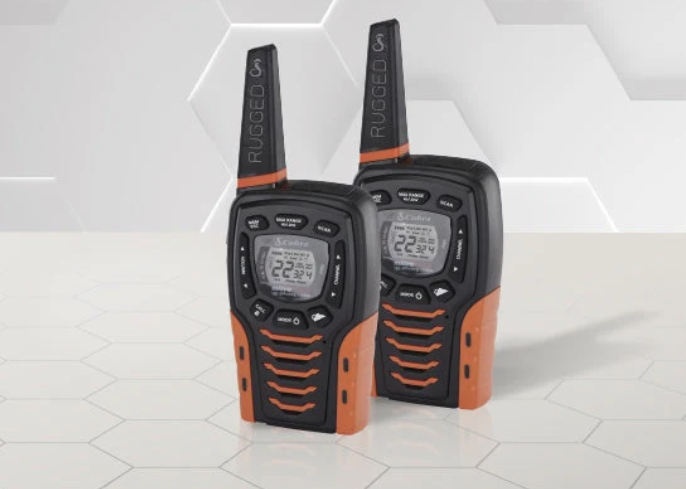
| Portable (handheld) | ~1–3 km open, less indoors | Retail, event security, hotels, small crews | Cheapest entry point; battery life limits |
| Mobile (vehicle-mounted) | ~10–30+ km | Delivery fleets, agriculture, ranches | Draws power from vehicle; needs installation |
| Marine (VHF) | ~10–30 km ship-to-ship | Boats, fishing crews | Must be waterproof; monitors channel 16 |
| Aerial (aviation) | Line-of-sight, tens of km | Pilots, ground crews | Regulated frequencies; specialized use only |
| Intrinsically safe | Similar to standard handheld | Oil/gas, grain elevators, mining | Spark-proof; non-negotiable where gas/dust risk exists |
Figures above assume open, unobstructed conditions real-world range is usually shorter once buildings, terrain, or equipment get involved (more on that below). Getting the category right before anything else saves money and prevents a scenario where a team buys twenty handhelds only to discover none of them are rated for the environment they’re working in.
Manufacturers list range figures sometimes stated in kilometers that assume open, unobstructed terrain with no buildings, hills, or interference. Real-world range is almost always shorter, and the gap depends on a few factors:
If a team’s coverage need is larger than a single radio type can reliably deliver, a repeater is usually the more practical fix.
A repeater receives a signal and retransmits it at higher power or from a higher elevation, extending effective coverage well beyond what handheld-to-handheld communication can achieve. This is especially relevant for:
Repeaters add cost and require a fixed installation point, so they’re generally worth considering only once a team has confirmed that standard radio-to-radio range isn’t sufficient for the space involved, not as a default first purchase.
It’s easy to treat accessories as an afterthought, but a few of them meaningfully affect whether a radio system holds up under daily use:
None of these are essential on day one, but skipping them often becomes a source of frustration once a radio system is in daily use rather than sitting in a box.
Answering these before comparing specific models tends to narrow the field quickly and avoids the common trap of buying based on price alone.
See also: Peter Thomas Roth Wiki Biography Career and Business
Two-way radios are a category where the “best” choice is entirely dependent on context. A marine crew, a warehouse team, a construction site, and a security detail all have different, non-overlapping requirements, and no single radio serves all of them well. Working out the environment, the realistic coverage area, and any safety certifications needed before comparing specific models or brands is what actually determines whether a radio system performs reliably once it’s in daily use.